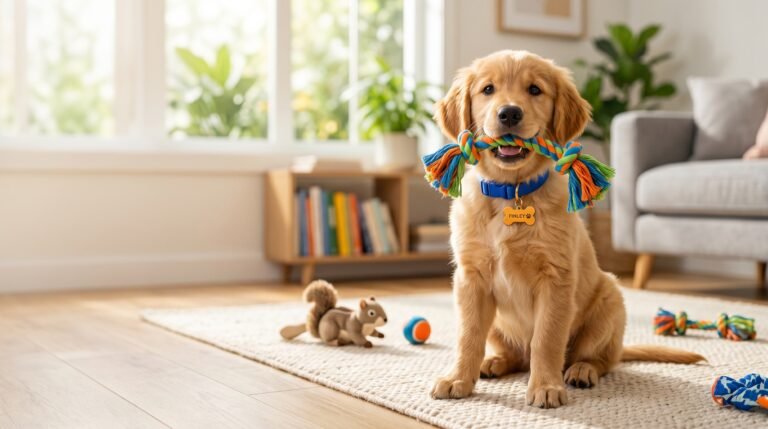
Bringing home a new puppy is an exciting experience, but it also comes with important responsibilities. Along with potty training, socialization, and teaching basic commands, crate training is one of the first skills every puppy should learn.
Unfortunately, many new dog owners misunderstand crate training. Some believe crates are cruel or feel like punishment. In reality, when introduced correctly, a crate becomes a safe, comfortable space where your puppy can relax, sleep, and feel secure.
Dogs naturally seek out small, protected spaces to rest. A properly introduced crate satisfies this instinct while helping owners manage common puppy challenges like potty training, chewing, separation anxiety, and nighttime routines.
In this beginner’s guide, you’ll learn exactly what crate training is, why it’s beneficial, how to choose the right crate, how to prepare it properly, and the most common mistakes new owners should avoid.
Whether you’ve just welcomed your first puppy or want to improve your current training routine, this guide will help you build positive crate habits that last a lifetime.
What Is Crate Training?
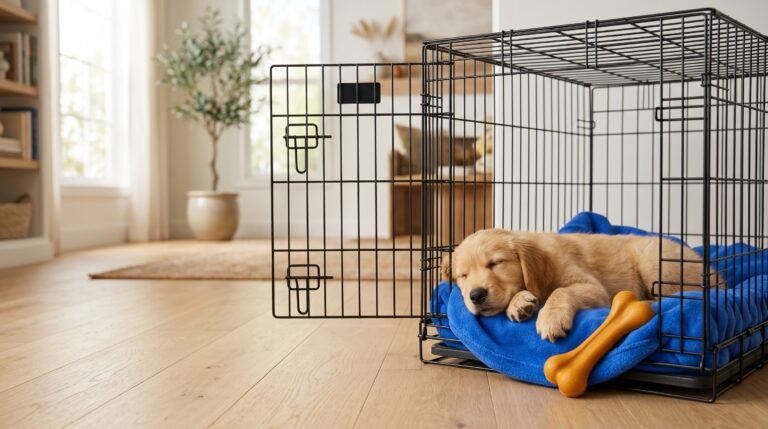
Crate training teaches your puppy to view their crate as a safe and comfortable place rather than a punishment.
When introduced gradually using positive reinforcement, most puppies learn to enjoy spending time inside their crate. Crate training also helps with potty training, prevents destructive chewing, establishes daily routines, and creates a secure place where your puppy can rest without stress.
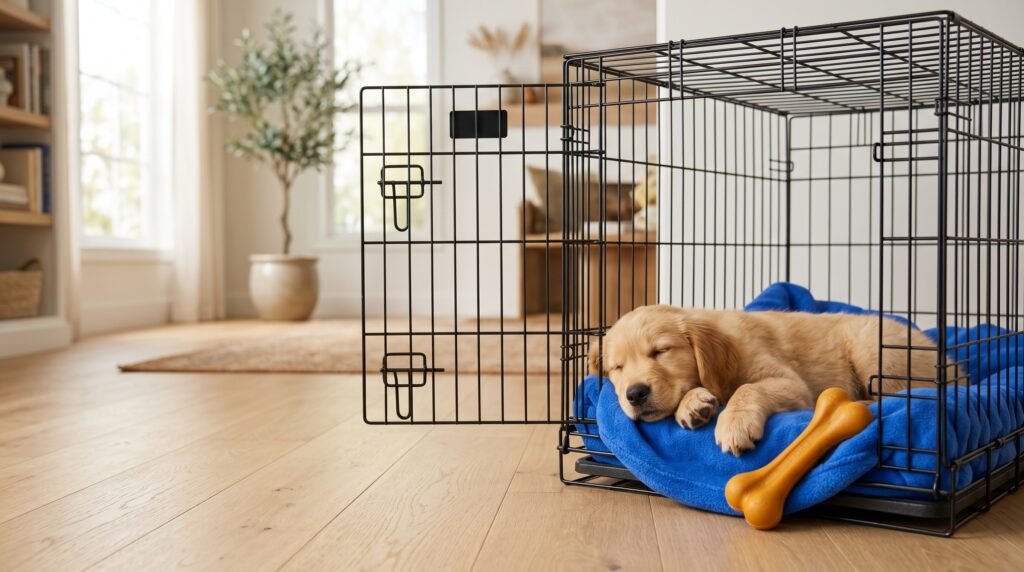
The goal is never to lock your puppy away for long periods. Instead, the crate becomes your puppy’s personal bedroom.
Definition of Crate Training
Crate training is the process of teaching a puppy to willingly enter and relax inside a properly sized dog crate, it’s like a puppy’s bedroom.
Just as people enjoy having a quiet place to sleep, puppies also appreciate having a private area where they feel protected.
Wild dogs and wolves naturally rest in den-like environments. Modern domestic dogs still retain many of these instincts.
A crate provides:
- Safety
- Comfort
- Security
- Predictability
When introduced correctly, many puppies eventually choose to rest inside their crate even when the door is open and that’s the ultimate goal.
Is Crate Training Good for Puppies?
Yes, veterinarians, professional dog trainers, and animal behavior experts widely recommend crate training when it’s done correctly.
A crate helps puppies develop healthy routines while keeping them safe during the months when they’re naturally curious and prone to chewing inappropriate objects.
However, crate training should always be based on:
- Positive reinforcement
- Patience
- Consistency
A crate should never be used as punishment, if your puppy begins associating the crate with fear or isolation, training becomes much more difficult.
Benefits of Crate Training
Crate training offers far more than simply containing your puppy, it supports both training and overall well-being.
Let’s look at the biggest advantages :
1. Makes Potty Training Easier
One of the greatest benefits of crate training is helping puppies learn bladder control, dogs naturally avoid soiling the area where they sleep.
Because of this instinct, puppies are more likely to wait until they’re taken outside if the crate is appropriately sized.
Crate training also helps owners establish a consistent potty schedule by encouraging regular bathroom breaks throughout the day.
2. Prevents Destructive Chewing
Puppies explore the world with their mouths.
Without supervision, they may chew:
- Shoes
- Furniture
- Electrical cords
- Children’s toys
- Houseplants
A crate keeps your puppy safe when you’re unable to watch them closely.
Rather than practicing destructive habits, your puppy learns to relax.
3. Creates a Safe Space
Life can sometimes become overwhelming for a puppy: visitors, loud noises, children, or busy households may create stress.
A crate gives your puppy a quiet place to retreat whenever they need rest.
Many adult dogs continue using their crates voluntarily because they associate them with comfort and security.
4. Helps Build Daily Routines
Dogs thrive on consistency.
Using the crate during:
- Nap times
- Bedtime
- Quiet time
- Short absences
helps establish predictable routines.
Predictable routines reduce stress and make training easier.
5. Improves Travel Safety
A puppy already comfortable in a crate experiences less stress during:
- Car rides
- Veterinary visits
- Grooming appointments
- Vacations
- Emergency evacuations
Crate-trained dogs often adapt much more easily to new environments.
6. Supports Recovery After Surgery or Injury
If your dog ever needs limited activity because of illness or surgery, crate training becomes incredibly valuable.
Instead of becoming anxious about confinement, your dog already understands that the crate is a safe place to rest.
Choosing the Right Crate
Selecting the right crate is one of the most important decisions you’ll make.
A crate that’s too small becomes uncomfortable.
A crate that’s too large can actually slow potty training because your puppy may sleep on one side and use the other as a bathroom.
Your puppy should be able to:
- Stand comfortably
- Turn around
- Lie down fully stretched
If you own a large-breed puppy, consider purchasing a crate with an adjustable divider panel.
The divider allows the crate to grow with your puppy while maintaining the correct amount of space during training.
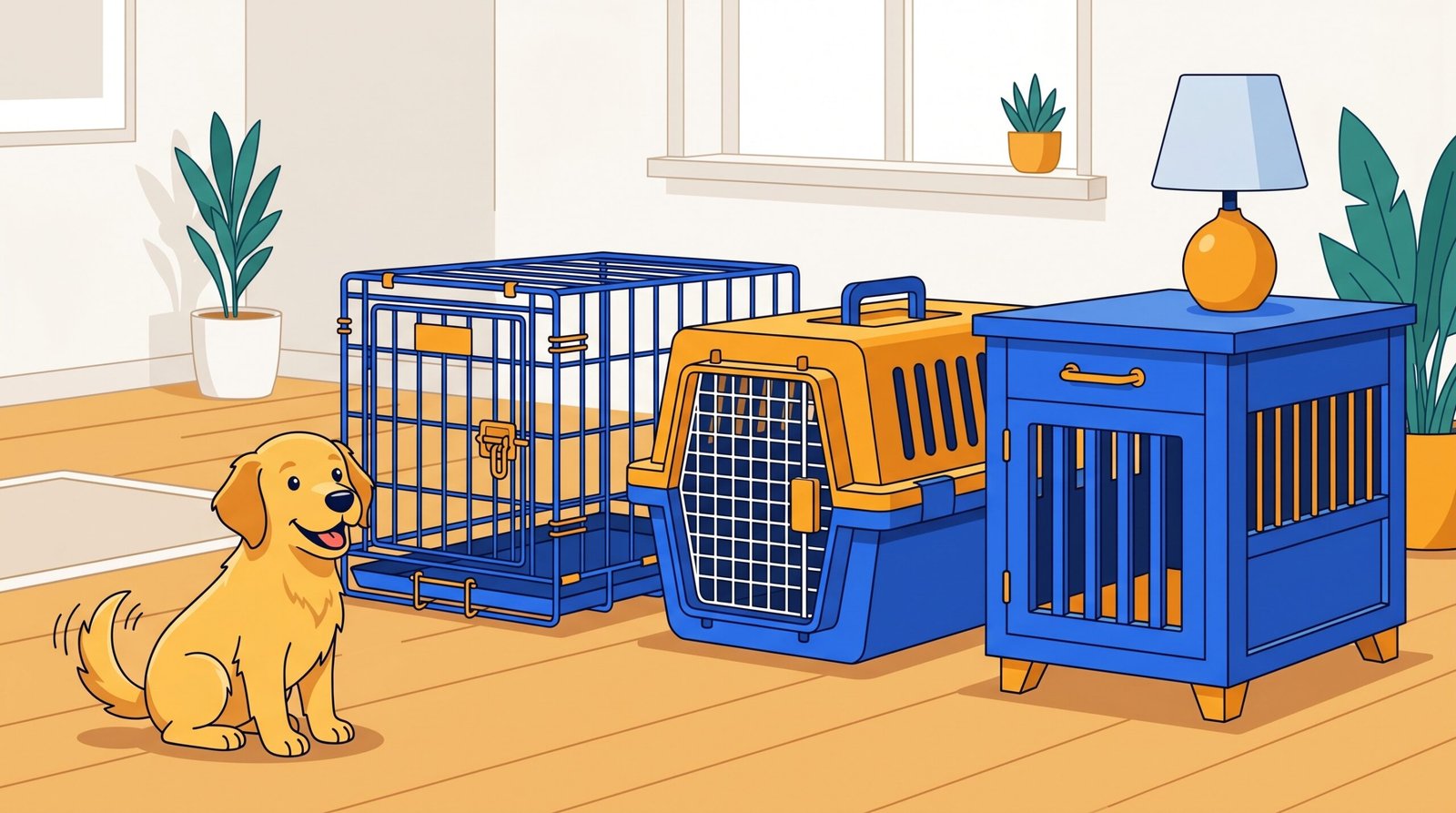
Types of Dog Crates
There are several popular crate styles :
Wire Crates
| Best for | Advantages |
| Home use | Excellent ventilation |
| Warm climates | Easy to clean |
| Puppies needing extra airflow | Divider panels available |
| Good visibility |
Plastic Crates
| Best for | Advantages |
| Travel | More enclosed |
| Nervous puppies | Creates a den-like feeling |
| Veterinary visits | Airline-approved models available |
Soft-Sided Crates
Best for:
- Calm adult dogs
- Temporary travel
Not recommended for young puppies that chew frequently.
Furniture-Style Crates
Best for:
- Home décor
- Adult dogs
While attractive, they’re usually more expensive and less practical during the early puppy stages.
Where Should You Put the Crate?
Location matters.
- During the day, place the crate in an area where your family spends time (Living room, Family room, Home office,…), puppies feel more comfortable when they can see and hear their family.
- At night, many trainers recommend placing the crate near your bed for the first few weeks, being close to you helps reduce anxiety while allowing you to hear if your puppy needs a nighttime potty break.
As your puppy grows more confident, you can gradually move the crate to its permanent location if desired.
Preparing the Crate
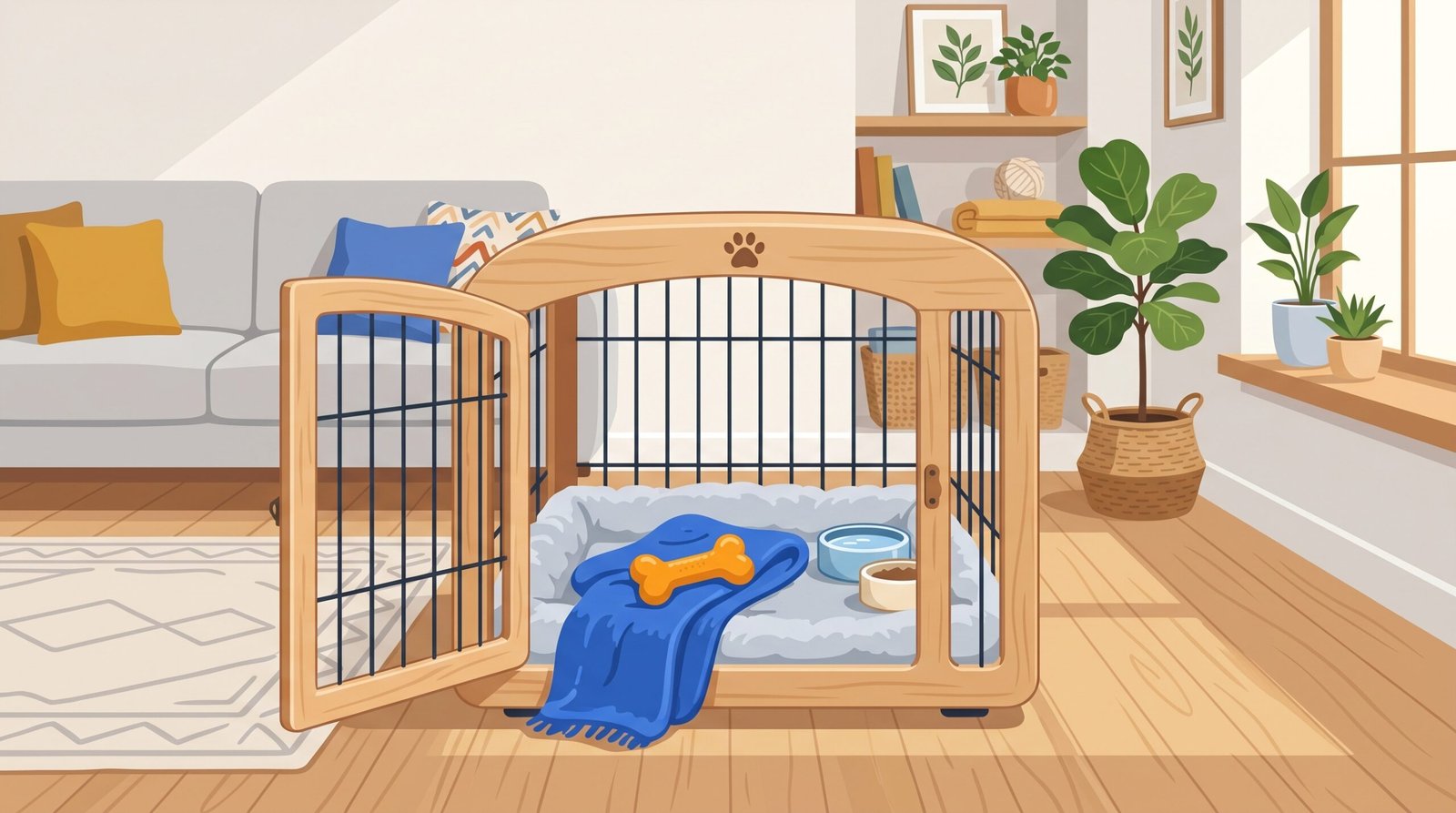
Before introducing your puppy to the crate, make it as inviting as possible.
Include:
- Soft bedding
- Safe chew toys
- Interactive puzzle toys
- A blanket if your puppy enjoys nesting
Avoid overcrowding the crate with too many items, the space should remain comfortable and easy to clean.
You can also feed meals near or inside the crate to help your puppy associate it with positive experiences.
Never force your puppy inside.
Instead, allow them to explore the crate at their own pace.
Common Beginner Mistakes
Many crate-training problems happen because owners unknowingly create negative associations.
Avoid these common mistakes :
Using the Crate as Punishment
Never send your puppy to the crate because they’re “in trouble.”
Your puppy should always feel safe inside.
Leaving Your Puppy Inside Too Long
Young puppies need:
- Exercise
- Social interaction
- Potty breaks
- Mental stimulation
The crate is not a substitute for supervision or companionship.
Rushing the Process
Some puppies enter the crate happily on the first day. others need several days or even weeks.
Allow your puppy to progress at their own pace, because patience produces lasting results.
Opening the Door Every Time Your Puppy Cries
If you immediately open the crate every time your puppy whines, they may learn that crying gets them released.
Instead, make sure their basic needs have been met, wait for a brief moment of quiet, and then calmly let them out.
This teaches that calm behavior—not barking or whining—opens the door.
By avoiding these beginner mistakes and creating a positive experience from the very first day, you’ll set your puppy up for long-term success.
Step-by-Step Crate Training Plan
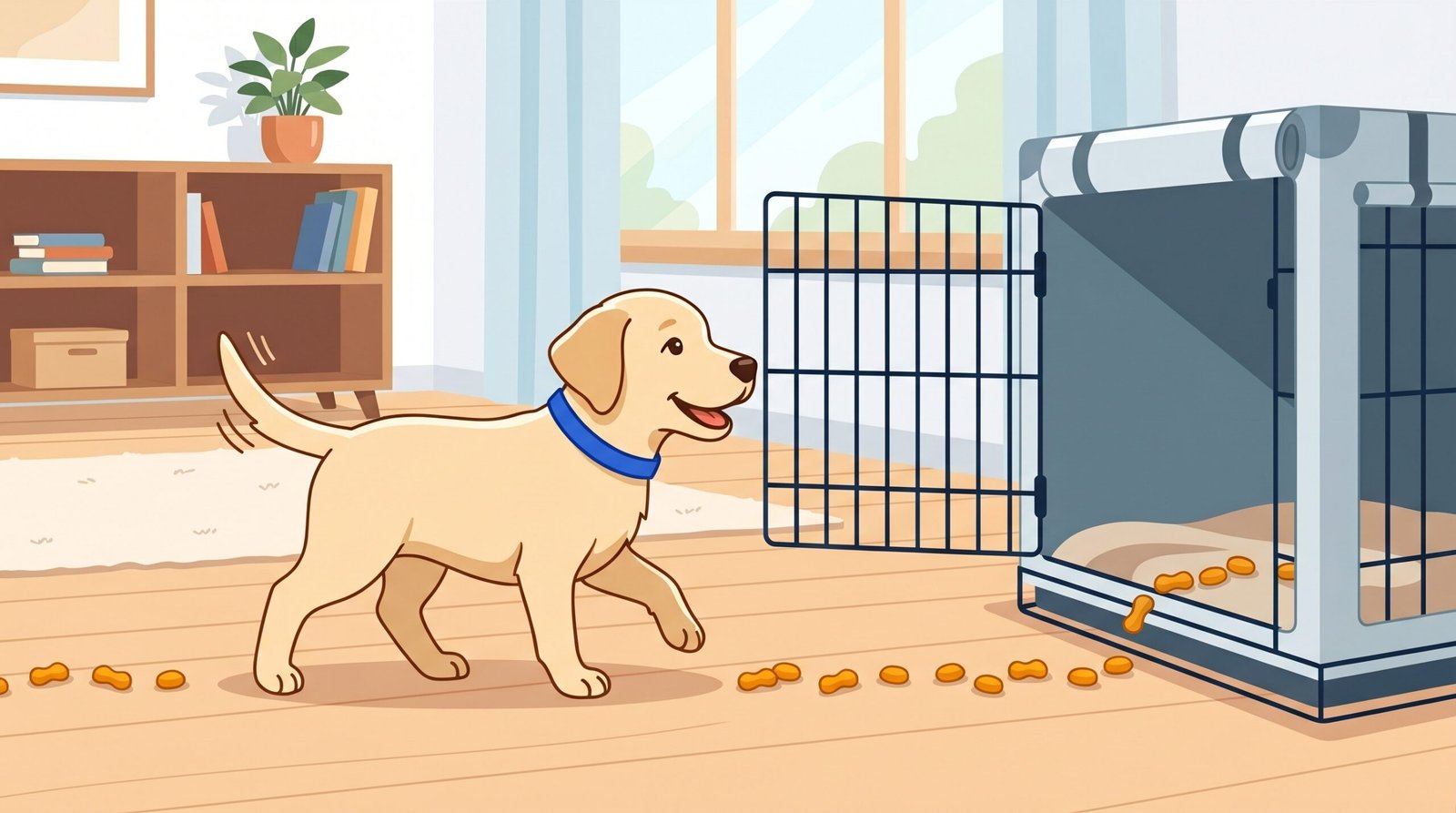
Crate training isn’t about forcing your puppy into a confined space—it’s about helping them build positive associations with their new “bedroom.” Every puppy learns at a different pace, so be patient and move to the next step only when your puppy is comfortable.
Step 1: Let Your Puppy Explore the Crate
Leave the crate door open and allow your puppy to investigate it on their own.
Encourage curiosity by placing:
- Small training treats
- Favorite toys
- A soft blanket
inside the crate.
Never push or pull your puppy into the crate, the goal is for them to choose to enter willingly.
Step 2: Feed Meals Inside the Crate
Food creates positive associations: begin by placing your puppy’s food bowl near the crate entrance.
As they become comfortable, gradually move the bowl farther inside until they happily eat all their meals in the crate.
Keep the door open during the first few meals.
Step 3: Introduce Short Crate Sessions
Once your puppy is entering the crate confidently:
- Ask them to enter.
- Give them a treat.
- Close the door for 10–20 seconds.
- Open the door before they become anxious.
Gradually increase the duration over several days.
Success comes from ending sessions while your puppy is still calm.
Step 4: Leave the Room Briefly
Once your puppy can relax in the crate for several minutes, begin leaving the room.
Start with:
- 30 seconds
- 1 minute
- 3 minutes
- 5 minutes
Slowly build up your absence while returning calmly and without excitement.
This teaches your puppy that you’ll always come back.
Step 5: Use the Crate During Daily Routines
Once your puppy is comfortable, begin using the crate for:
- Afternoon naps
- Quiet time
- Short errands
- Bedtime
Consistency helps your puppy understand that the crate is simply part of everyday life.
Crate Training Schedule by Age
Young puppies cannot stay in a crate for long periods because they have limited bladder control.
Use this general guide:
| Puppy Age | Maximum Daytime Crate Time |
|---|---|
| 8–10 Weeks | 30–60 minutes |
| 10–12 Weeks | 1–2 hours |
| 3 Months | 2–3 hours |
| 4 Months | 3–4 hours |
| 5 Months | 4–5 hours |
| 6 Months | Up to 6 hours |
These are general guidelines.
Every puppy is different, and active breeds may need more frequent breaks for exercise and mental stimulation.
Always provide potty breaks before and after crate time.
Nighttime Crate Training
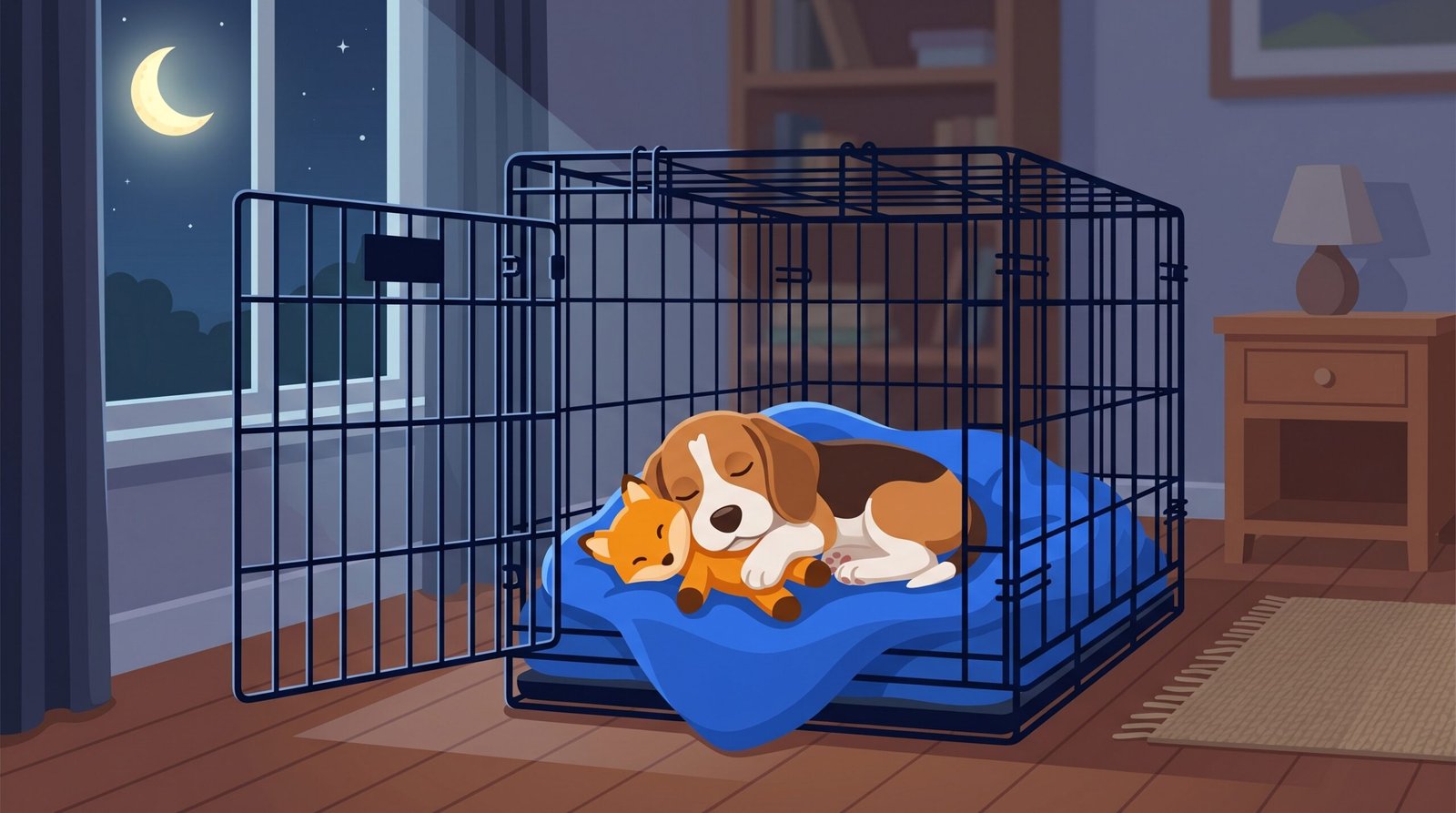
Nighttime is often the most challenging part of crate training.
Fortunately, most puppies adapt within a few weeks.
Keep the Crate Near Your Bed
For the first several nights, place the crate close to where you sleep.
Your presence helps your puppy feel secure and allows you to hear when they genuinely need a potty break.
Establish a Bedtime Routine
A predictable evening routine helps your puppy settle more quickly.
Try this sequence:
- Evening walk or play session
- Dinner (several hours before bedtime)
- Final potty break
- Calm cuddle time
- Into the crate
Dogs thrive on routines.
Keep Nighttime Potty Breaks Quiet
If your puppy wakes during the night:
- Take them directly outside.
- Keep lights dim.
- Avoid talking or playing.
- Return them to the crate immediately after they finish.
This teaches that nighttime is for sleeping—not playing.
Don’t Reward Whining
It’s normal for puppies to whine during the first few nights.
Before responding, ask yourself:
- Have they recently gone potty?
- Are they hungry?
- Are they uncomfortable?
If all needs have been met, wait for a brief moment of quiet before opening the crate.
This helps prevent your puppy from learning that whining always opens the door.
Common Crate Training Problems and Solutions
My Puppy Cries in the Crate
Possible causes:
- Separation anxiety
- Too much crate time
- Needs a potty break
- Moving too quickly through training
Solution:
Return to shorter crate sessions and rebuild positive associations gradually.
My Puppy Refuses to Enter the Crate
Solution:
- Never force them.
- Toss treats inside.
- Feed meals in the crate.
- Use favorite toys.
- Allow exploration at their own pace.
My Puppy Has Accidents in the Crate
Possible reasons:
- Crate is too large.
- Puppy stayed inside too long.
- Potty schedule isn’t frequent enough.
Solution:
Review your routine and ensure the crate is appropriately sized.
My Puppy Chews the Crate
Solution:
- Provide safe chew toys designed for puppies.
- Exercise your puppy before crate time to help them relax.
Frequently Asked Questions
Is crate training cruel?
No, when introduced properly, crate training provides puppies with a secure, comfortable place to rest.
The crate should never be used as punishment or for extended confinement.
How long does crate training take?
Many puppies begin feeling comfortable within one to two weeks.
Complete crate confidence may take several weeks depending on the puppy’s personality and previous experiences.
Should I cover my puppy’s crate?
Some puppies feel calmer with a partially covered crate. Others prefer being able to see their surroundings.
Observe your puppy’s behavior and adjust accordingly.
Can my puppy sleep in a crate every night?
Yes, many puppies—and even adult dogs—sleep comfortably in their crates every night.
When can I stop using the crate?
Many owners gradually reduce crate use after the puppy reliably:
- Sleeps through the night
- Is fully potty trained
- Doesn’t chew household items when unsupervised
Some dogs continue choosing the crate as their favorite sleeping place throughout their lives.
Conclusion
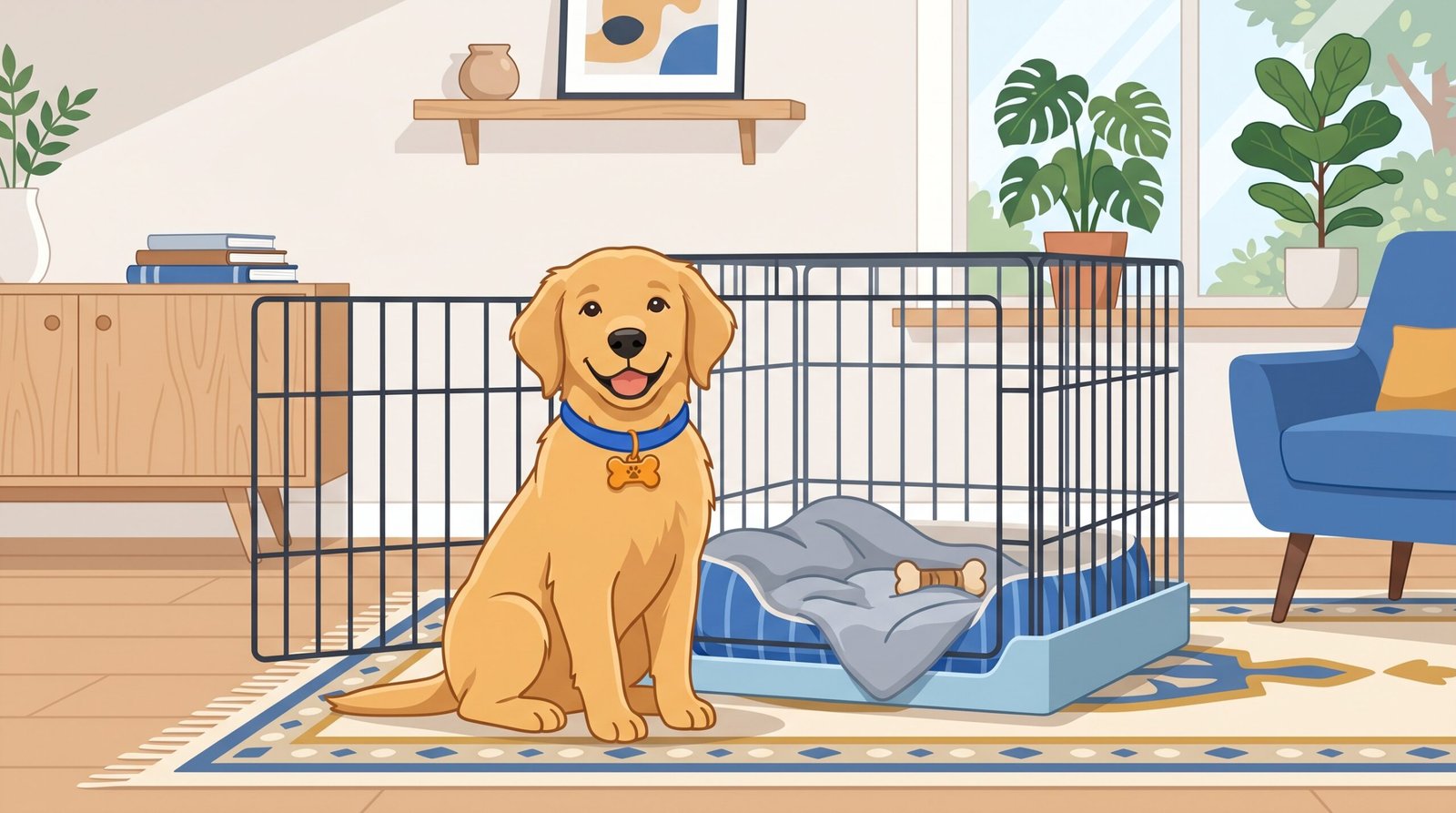
Crate training is one of the best investments you can make in your puppy’s future.
When introduced with patience, consistency, and positive reinforcement, a crate becomes far more than a training tool—it becomes your puppy’s safe place.
Remember that every puppy learns at their own pace.
Celebrate small successes, avoid punishment, and focus on creating positive experiences.
A puppy that loves their crate grows into a confident adult dog who feels secure both at home and during travel, veterinary visits, and new experiences.
With the right approach, crate training becomes one of the easiest and most rewarding parts of raising a happy, well-behaved dog.