Bringing home a new puppy is filled with exciting moments, but one behavior surprises almost every first-time dog owner—biting. One minute your puppy is cuddling in your lap, and the next they’re chewing on your fingers, shoes, or clothing with their razor-sharp baby teeth.
If you’re wondering, “Why does my puppy bite so much?”, you’re not alone. Puppy biting is one of the most common concerns among new dog owners. The good news is that, in most cases, it’s completely normal and a natural part of your puppy’s development.
Puppies explore the world with their mouths just as human babies explore with their hands. Biting, chewing, and nipping help them learn about their surroundings, interact with other dogs, and relieve discomfort caused by teething.
The key isn’t to stop all biting overnight—it’s to teach your puppy what is appropriate to bite and how to control the force of their mouth.
In this guide, you’ll discover why puppies bite, when biting is normal, when it may become a behavioral problem, and how to prepare for successful bite inhibition training.
Why Do Puppies Bite?
Puppies bite because it’s a natural part of growing up. They bite during play, while teething, when exploring new objects, and while learning social skills. Most puppies begin biting between 8 and 16 weeks of age, and the behavior gradually decreases as they mature with proper training and consistent guidance.
Biting is completely normal and serves several important purposes during development :
1. Teething Relief
One of the biggest reasons puppies bite is teething: between approximately 3 and 6 months of age, puppies lose their baby teeth while their adult teeth begin to grow.
This process can cause sore gums and discomfort. So, chewing helps relieve pressure and massage irritated gums.
During this stage, your puppy may chew:
- Furniture
- Shoes
- Toys
- Blankets
- Hands
- Clothing
Providing safe chew toys can help redirect this natural behavior.
2. Exploring the World
Puppies experience the world through their mouths.
Your puppy may gently bite:
- Leaves
- Sticks
- Toys
- Furniture
- Your hands
This exploration helps them learn about different textures, shapes, and objects.
3. Play Behavior
Watch a litter of puppies playing together.
You’ll notice constant:
- Nipping
- Wrestling
- Chasing
- Mouthing
This play teaches puppies valuable social skills.
When one puppy bites too hard, the other often yelps and stops playing.
This teaches bite inhibition—the ability to control bite pressure. Owners can use similar principles during training.
4. Attention-Seeking
Some puppies quickly learn that biting gets a reaction.
If every nip results in:
- Talking
- Laughing
- Chasing
- Pushing them away
your puppy may interpret that as play or attention.
Even negative attention can unintentionally reinforce biting.
5. Overexcitement
Many puppies become “mouthy” when they’re overly excited.
Common situations include:
- Greeting family members
- Playing fetch
- Meeting new people
- Running around the yard
An overstimulated puppy often has difficulty controlling their impulses.
This is especially common in energetic breeds such as Labrador Retrievers, Border Collies, Australian Shepherds, and Golden Retrievers.
6. Overtiredness
Just like young children, puppies can become cranky when they’re tired.
An overtired puppy may suddenly begin:
- Biting
- Zooming around the house
- Ignoring commands
- Barking excessively
Many owners mistake this behavior for high energy when, in reality, the puppy simply needs a nap.
A consistent sleep schedule often reduces excessive biting.
Is Puppy Biting Normal?
Yes. In fact, nearly every healthy puppy goes through a biting phase.
Biting is considered a normal developmental behavior because it helps puppies:
- Learn bite control
- Explore their surroundings
- Relieve teething discomfort
- Play with littermates
- Develop social skills
Most puppies naturally reduce biting as they mature, especially when owners consistently teach appropriate behavior.
The goal is not to eliminate all mouthing immediately.
Instead, teach your puppy:
- What they can chew.
- What they should never bite.
- How gently they should use their mouth.
Puppy Biting vs. Aggression
Many first-time owners worry that their puppy is aggressive.
Fortunately, normal puppy biting is very different from true aggression.
Healthy puppy play usually includes:
- Loose body language
- Play bows
- Wagging tail
- Relaxed ears
- Excited movements
Aggressive behavior may include:
- Stiff posture
- Deep growling
- Lip lifting
- Lunging
- Snapping without warning
True aggression in young puppies is uncommon.
If your puppy consistently displays aggressive body language, consult your veterinarian or a certified dog behavior professional.
When Does Puppy Biting Become a Problem?
Most puppy biting improves naturally with training and maturity. However, the behavior may require additional attention if your puppy:
- Bites hard enough to break the skin regularly.
- Continues biting despite consistent training.
- Guards toys or food while biting.
- Shows aggressive body language.
- Targets faces or young children.
- Becomes increasingly reactive over time.
Early intervention helps prevent unwanted habits from continuing into adulthood.
The sooner you teach bite inhibition and appropriate chewing behaviors, the easier training becomes.
Why Early Training Matters?
Puppies don’t automatically learn that human skin is much more sensitive than another puppy’s fur.
Without guidance, they simply continue using the same play style they’ve always known.
Teaching bite inhibition during puppyhood helps your dog become:
- Safer around people
- Gentler during play
- Easier to handle
- More confident
- Better socialized
Good habits developed during the first few months often last a lifetime.
How to Stop Puppy Biting (Step-by-Step)
Stopping puppy biting doesn’t mean punishing your puppy. Instead, you’re teaching them that gentle behavior leads to rewards while rough play makes the fun stop.
Follow the steps below to stop the biting :
Step 1: Stay Calm
When your puppy bites, avoid:
- Yelling
- Hitting
- Pulling your hand away quickly
Sudden movements can encourage your puppy to chase and bite even more. Instead, stay calm and stop interacting for a moment.
Step 2: End Play Immediately
Puppies quickly learn through consequences.
If your puppy bites too hard:
- Stand up.
- Fold your arms.
- Turn away.
- Ignore them for 15–30 seconds.
This teaches:
Biting makes the fun stop.
After the short pause, calmly resume play.
Step 3: Redirect to a Chew Toy
Always have an appropriate chew toy nearby.
When your puppy starts biting your hands or clothes:
- Offer a rubber chew toy.
- Give a teething ring.
- Redirect to a rope toy.
Praise your puppy when they choose the toy instead of your hands, this teaches them what they can chew.
Step 4: Reward Gentle Play
Positive reinforcement speeds up learning.
Whenever your puppy:
- Licks instead of bites
- Plays gently
- Releases your hand
- Chooses a toy
reward them immediately with:
- Praise
- Small treats
- Gentle petting
Dogs repeat behaviors that earn rewards.
Step 5: Meet Your Puppy’s Exercise Needs
Many puppies bite simply because they have too much energy.
Daily exercise should include:
- Walks (appropriate for your puppy’s age)
- Fetch
- Tug games
- Short training sessions
- Social play with other friendly puppies
A tired puppy is usually much calmer.
Step 6: Provide Mental Enrichment
Mental exercise reduces boredom-related biting.
Great enrichment activities include:
- Puzzle feeders
- Snuffle mats
- Food-stuffed toys
- Basic obedience games
- Hide-and-seek
Even 15–20 minutes of brain games each day can make a noticeable difference.
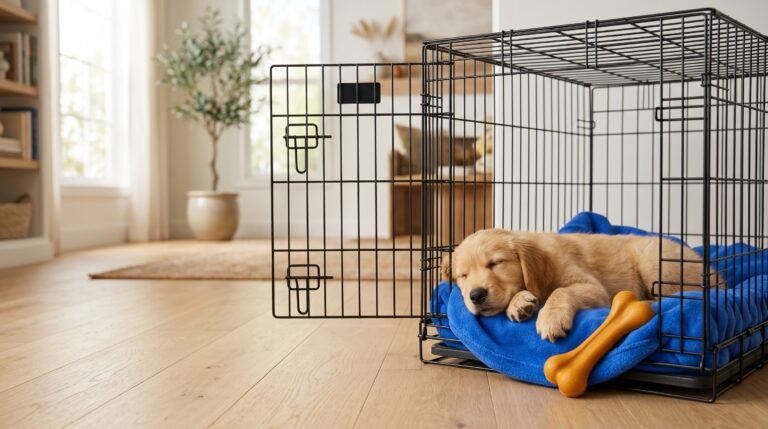
Step 7: Follow a Consistent Nap Schedule
Young puppies need 16–20 hours of sleep per day.
An overtired puppy often becomes:
- Hyperactive
- Mouthy
- Difficult to redirect
If biting suddenly increases after lots of play, your puppy may simply need a quiet nap in their crate or resting area.
Common Mistakes to Avoid
Even well-meaning owners can accidentally encourage biting.
Playing Rough with Hands
Avoid wrestling with your puppy using your hands. Instead, use toys for interactive play.
Punishing Your Puppy
Physical punishment may create fear and damage trust. Positive reinforcement is far more effective for teaching bite inhibition.
Being Inconsistent
Everyone in the household should follow the same rules.
If one person allows hand biting while another discourages it, your puppy becomes confused.
Not Providing Enough Chew Toys
Puppies need safe outlets for chewing: offer a variety of age-appropriate chew toys and rotate them regularly to keep them interesting.
Expecting Instant Results
Learning bite inhibition takes time.
Celebrate small improvements and stay patient.
Frequently Asked Questions
At what age do puppies stop biting?
Most puppies begin biting less between 5 and 7 months of age, once teething is complete and bite inhibition has developed.
Is puppy biting a sign of aggression?
Usually not, most puppy biting is caused by play, teething, excitement, or exploration rather than aggression.
Should I let my puppy chew on my hands?
No, it’s best to teach your puppy from the beginning that hands are for gentle petting—not chewing.
Redirect biting toward appropriate toys instead.
What are the best toys for biting puppies?
Good choices include:
- Rubber chew toys
- Puppy teething toys
- Rope toys
- Food-stuffable toys
- Durable rubber balls
Choose toys appropriate for your puppy’s size and chewing strength.
When should I seek professional help?
Contact your veterinarian or a certified dog trainer if your puppy:
- Frequently breaks the skin with bites.
- Shows stiff body language or resource guarding.
- Growls aggressively without obvious reason.
- Doesn’t improve despite several weeks of consistent training.
Conclusion
Puppy biting is one of the most normal stages of early dog development, but that doesn’t mean it should be ignored.
By teaching bite inhibition early, redirecting chewing toward appropriate toys, rewarding gentle behavior, and providing enough exercise, mental stimulation, and rest, you can help your puppy develop excellent manners.
Remember that consistency is more important than perfection.
Every calm interaction teaches your puppy how to behave around people.
With patience and positive reinforcement, the sharp little puppy teeth that seem overwhelming today will soon become a thing of the past, leaving you with a confident, well-mannered adult dog.