
Dogs bark—it’s one of the most natural ways they communicate. While an occasional bark is perfectly normal, constant barking can become frustrating for both dog owners and neighbors. If your dog barks at every passing car, every knock at the door, or seemingly for no reason at all, you’re probably wondering how to stop excessive barking without harming your dog’s well-being.
The good news is that barking is almost always a symptom of something else. Dogs don’t bark simply to annoy their owners—they bark because they’re trying to communicate a need, emotion, or response to their environment.
Understanding why your dog is barking is the first step toward solving the problem.
In this guide, you’ll learn the most common reasons dogs bark, how to recognize different types of barking, and when excessive barking may signal a behavioral or medical issue. By identifying the root cause, you’ll be able to choose the most effective training approach and help your dog become calmer and more confident.
Is Barking Normal?
Barking is a natural behavior for dogs, just as talking is natural for humans.
Different breeds bark more than others. For example:
- Beagles often bark to communicate scents they detect.
- German Shepherds frequently bark to alert their families.
- Chihuahuas may bark at unfamiliar sounds or people.
- Border Collies often bark during play or while herding.
The goal isn’t to eliminate barking completely. Instead, you want your dog to bark only when it’s appropriate.
A dog that never barks may actually be ill, frightened, or unable to communicate normally.
Healthy dogs use barking as one of several communication tools, along with body language, facial expressions, tail movements, and vocalizations.
Why Do Dogs Bark?
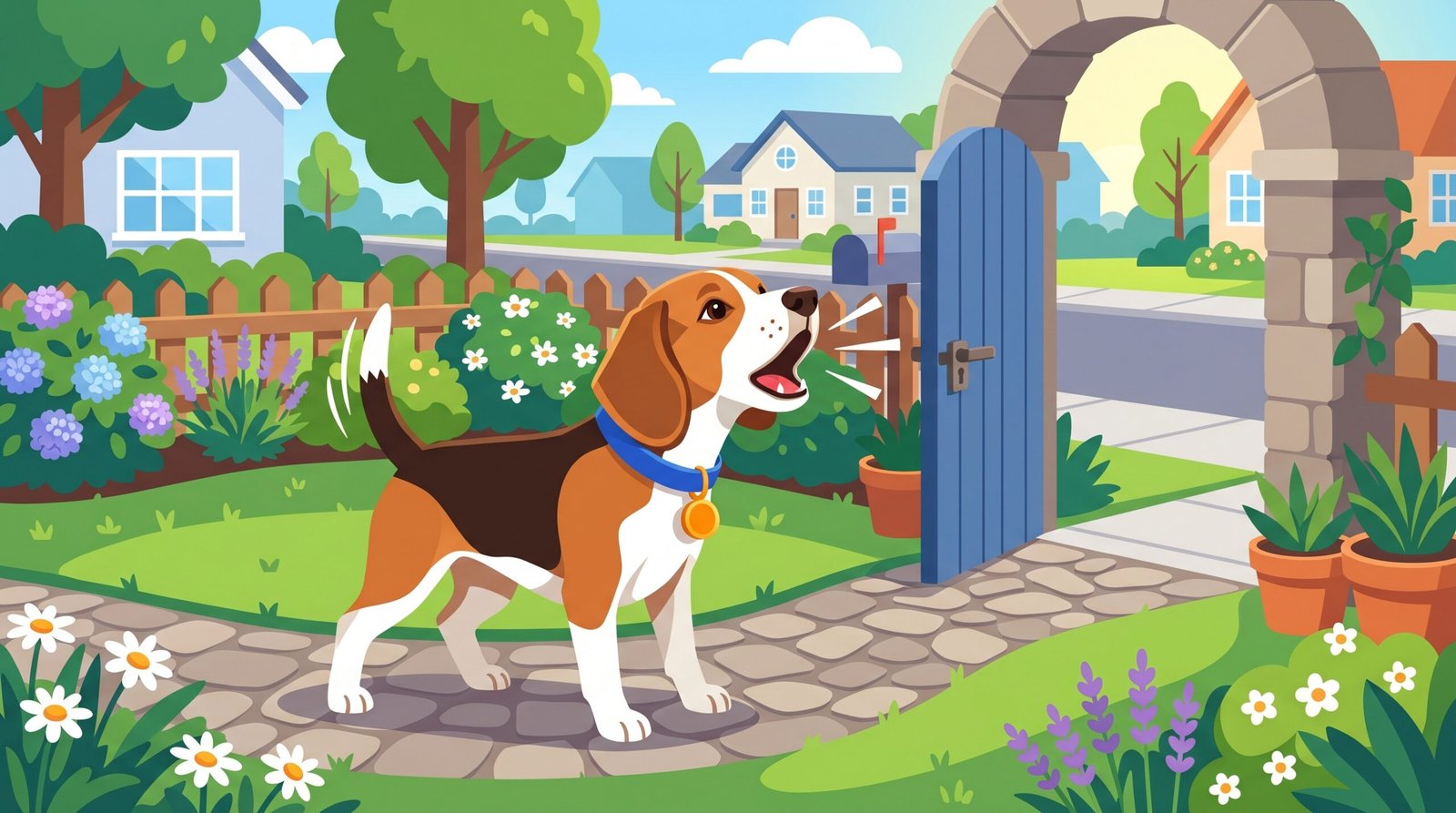
Dogs bark to communicate. Barking can be triggered by excitement, fear, boredom, loneliness, territorial instincts, anxiety, attention-seeking behavior, or environmental stimuli.
Excessive barking usually occurs when a dog repeatedly reacts to the same trigger without learning how to relax. The solution is not simply stopping the bark—it is understanding and addressing the reason behind it.
Let’s explore the types of barking :
1. Territorial Barking
Territorial barking is one of the most common forms of excessive barking.
Your dog believes it’s their responsibility to protect:
- Your home
- Your yard
- Your family
- Your car
Common triggers include:
- People walking past your house
- Delivery drivers
- Neighbors
- Other dogs
- Wildlife
You’ll often notice:
- Standing at windows
- Barking while facing the front door
- Raised posture
- Tail held high
Territorial barking usually stops once the perceived “threat” leaves.
2. Alert Barking
Alert barking is different from territorial barking, your dog isn’t necessarily trying to scare anyone away.
Instead, they’re simply letting you know something has changed.
Examples include:
- The doorbell rings
- Someone knocks
- A strange noise outside
- A package is delivered
- A family member arrives home
Alert barking is normal.
Problems occur when your dog continues barking long after the event has passed.
3. Attention-Seeking Barking
Dogs quickly learn what gets your attention.
If barking consistently results in:
- Petting
- Talking
- Treats
- Eye contact
- Playtime
Your dog may begin barking whenever they want interaction.
Even saying: “Quiet!”, can accidentally reward attention-seeking barking because your dog received exactly what they wanted—your attention.
4. Boredom Barking
A bored dog often creates their own entertainment. Unfortunately, excessive barking can become one of those activities.
Dogs left alone for long periods without:
- Exercise
- Mental stimulation
- Toys
- Social interaction
may bark simply because they have nothing else to do.
Working breeds such as:
- Border Collies
- Australian Shepherds
- Belgian Malinois
- Huskies
are especially prone to boredom-related barking.
These intelligent dogs require daily physical activity and mental challenges.
5. Fear Barking
Fear can trigger loud, repetitive barking.
Common fears include:
- Thunderstorms
- Fireworks
- Vacuum cleaners
- Strangers
- New environments
- Loud vehicles
Fear barking often comes with:
- Flattened ears
- Tail tucked between the legs
- Trembling
- Avoidance behavior
Rather than being aggressive, your dog is trying to create distance from something they perceive as threatening.
6. Separation Anxiety
Dogs are social animals, some become extremely distressed when left alone.
Signs of separation anxiety include:
- Continuous barking
- Howling
- Destructive chewing
- Scratching doors
- Pacing
- Indoor accidents
Unlike boredom barking, separation anxiety begins shortly after the owner leaves and often continues until they return.
This type of barking usually requires a structured training plan and, in severe cases, guidance from a veterinarian or certified dog behavior professional.
7. Excitement Barking
Some dogs bark because they’re simply happy.
You might notice excitement barking when:
- Picking up the leash
- Preparing meals
- Greeting visitors
- Arriving at the dog park
- Playing fetch
Excitement barking is generally harmless unless it becomes excessive.
Teaching impulse control can help reduce overexcitement while preserving your dog’s enthusiasm.
8. Frustration Barking
Frustration occurs when your dog wants something but can’t reach it.
Examples include:
- Seeing another dog across the street
- Watching squirrels through a fence
- Being behind a baby gate
- Waiting to be let outside
Frustration barking often sounds repetitive and urgent.
Many dogs also jump, spin, or paw at barriers while barking.
9. Medical Causes
Sometimes excessive barking isn’t a training issue at all.
Medical conditions that may contribute include:
- Hearing loss
- Vision changes
- Pain
- Cognitive dysfunction in senior dogs
- Neurological disorders
If your dog’s barking suddenly changes without an obvious explanation, schedule a veterinary examination to rule out health problems.
Common Signs of Excessive Barking
Not all barking is problematic.
Your dog’s barking may require attention if they:
- Bark continuously for several minutes.
- React to every sound they hear.
- Bark whenever left alone.
- Ignore your attempts to redirect them.
- Become increasingly excited while barking.
- Disturb neighbors regularly.
When barking becomes a daily habit rather than an occasional response, it’s time to identify the underlying cause.
When Does Barking Become a Behavioral Problem?
The key isn’t how loud your dog barks, it’s how often and why they bark.
Ask yourself these questions:
- Does my dog calm down after a few barks?
- Is there always a clear trigger?
- Can I redirect my dog’s attention?
- Does the barking happen every day?
- Has the behavior suddenly become worse?
If the answer to several of these questions concerns you, excessive barking has likely become a learned behavior rather than simple communication.
The encouraging news is that learned behaviors can also be changed with consistent training, patience, and positive reinforcement.
How to Stop Excessive Barking: Effective Training Methods That Really Work
Now that you understand why dogs bark, it’s time to learn how to reduce excessive barking in a way that is kind, effective, and long-lasting.
Many dog owners make the mistake of trying to stop the noise without understanding the cause. Barking is your dog’s way of communicating, so the goal isn’t to eliminate barking altogether—it’s to teach your dog when barking is appropriate and when it’s time to be quiet.
With consistency, patience, and positive reinforcement, most dogs can learn to bark less while remaining happy and confident.
1. Identify What Triggers Your Dog’s Barking
The first step is understanding why your dog is barking.
Spend a few days observing your dog’s behavior and ask yourself:
- Does my dog bark at people walking by?
- Does my dog bark whenever the doorbell rings?
- Does barking happen only when I’m away?
- Is my dog barking because they’re bored?
- Does barking start during playtime?
Keeping a simple journal of barking episodes can help you identify patterns.
Once you know the trigger, you’ll know which training method to use.
2. Reward Quiet Behavior
Dogs repeat behaviors that bring positive results.
Instead of focusing only on stopping barking, reward your dog whenever they remain calm.
When your dog becomes quiet:
- Calmly praise them.
- Offer a small training treat.
- Reward relaxed body language.
Over time, your dog learns that staying quiet is more rewarding than barking.
3. Teach the “Quiet” Command
Teaching a “Quiet” cue is one of the most effective training tools.
Step-by-Step :
- Allow your dog to bark once or twice.
- Calmly say “Quiet.”
- Wait until your dog stops barking.
- Immediately reward the silence.
- Repeat daily for 5–10 minutes.
Keep training sessions positive and short to maintain your dog’s attention.
4. Reduce Your Dog’s Exposure to Triggers
Sometimes the easiest solution is preventing your dog from seeing or hearing the things that trigger barking.
For example:
If your dog barks at people walking past the window:
- Close the curtains.
- Install frosted window film.
- Move your dog’s bed away from the window.
If outdoor sounds trigger barking:
- Play calming background music.
- Use a white noise machine.
- Keep your dog in a quieter part of the house.
Preventing constant exposure helps your dog remain relaxed.
5. Provide More Exercise
Many dogs bark simply because they have excess energy.
Daily exercise should include activities suited to your dog’s breed and age.
Examples include:
- Daily walks
- Fetch
- Hiking
- Swimming
- Agility courses
- Running
A tired dog is far less likely to bark out of boredom or frustration.
6. Increase Mental Stimulation
Mental exercise is just as important as physical activity.
Try adding:
- Puzzle feeders
- Snuffle mats
- Food-dispensing toys
- Hide-and-seek games
- Obedience training
- Scent games
Fifteen to twenty minutes of mental stimulation each day can dramatically reduce boredom-related barking.
7. Address Separation Anxiety
If your dog only barks when left alone, they may be experiencing separation anxiety.
Help them by:
- Leaving for very short periods.
- Returning before they become distressed.
- Gradually increasing your time away.
- Avoiding emotional departures and greetings.
For severe separation anxiety, consult a veterinarian or certified dog trainer.
8. Never Punish Barking
Punishment often creates fear rather than understanding.
Avoid using:
- Yelling
- Physical punishment
- Shock collars
- Harsh corrections
These methods may temporarily stop barking but often increase anxiety and damage your relationship with your dog.
Positive reinforcement builds trust while encouraging lasting behavioral change.
Common Mistakes to Avoid
Even experienced dog owners can accidentally reinforce barking.
Inconsistency
- Everyone in the household should follow the same rules.
- Mixed messages slow down training.
Rewarding Barking Without Realizing It
If you immediately respond every time your dog barks, they learn that barking gets your attention. Instead, reward calm behavior.
Expecting Instant Results
Training takes time, most dogs improve over several weeks of consistent practice.That why you need to stay patient.
Ignoring Your Dog’s Needs
Dogs that don’t receive enough:
- Exercise
- Mental stimulation
- Social interaction
are much more likely to bark excessively.
Meeting these needs often solves the problem naturally.
Frequently Asked Questions
Why does my dog bark at everything?
Dogs may bark because they are alert, bored, fearful, excited, territorial, or anxious. Identifying the specific trigger is the key to reducing excessive barking.
Can excessive barking be stopped completely?
No, barking is a normal form of communication.
The goal is to reduce unnecessary barking while allowing your dog to communicate appropriately.
How long does it take to stop excessive barking?
Some dogs improve within two to four weeks.
Dogs with long-standing habits or anxiety may require several months of consistent training.
Should I ignore attention-seeking barking?
Yes, if your dog’s basic needs have been met, ignore attention-seeking barking and reward quiet behavior instead.
Are anti-bark collars recommended?
Most professional trainers recommend positive reinforcement before using bark-control devices.
Training that builds confidence is generally more effective and humane.
Conclusion

Every bark has a reason. Instead of asking, “How do I stop my dog from barking?” ask, “What is my dog trying to tell me?”
When you understand the cause, you can provide the right solution.
By combining regular exercise, mental enrichment, positive reinforcement, and consistent training, you’ll help your dog become calmer, happier, and more confident.
Training isn’t about eliminating your dog’s voice, it’s about teaching them when barking is helpful—and when it’s time to relax.
With patience and consistency, you’ll enjoy a quieter home while strengthening the bond with your four-legged companion.